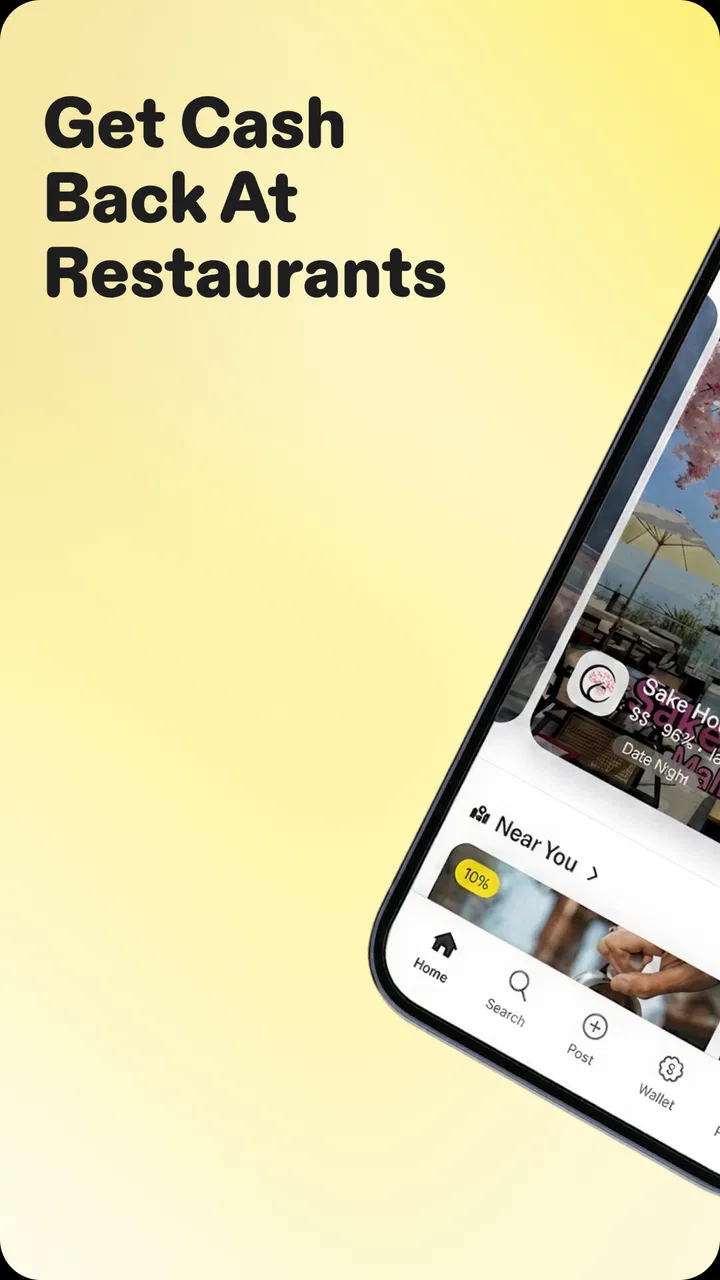
Franki: Dine and Earn Rewards
- 3.1
- Rating
- 100.00K
- Installs
- Free
- Price

 Analysis by App-foxy
I approached Franki: Dine and Earn Rewards as a practical food-and-drink companion rather than another app I would open constantly. Its purpose is easy to understand: it connects restaurant discovery with rewards, giving me a reason to check it before deciding where to eat. That sounds simple, but the value depends on how smoothly it fits into a real outing, how much effort it takes to keep using, and whether the available reward experience feels worth changing my usual habits.
Franki Inc. presents the app for people who want more from restaurant visits than a receipt at the end of a meal. It is free to use, carries a Teen content rating, and has passed the one-hundred-thousand-install mark. Those details suggest a reasonably established food app, although its average rating of 3.1 from roughly four hundred ratings shows that the experience is not universally satisfying. I would treat it as a useful extra layer for dining, not as the only tool I rely on when I need a restaurant immediately.
How Franki fits into an ordinary meal
The most natural time to use it is before going out. Instead of opening a map app, searching restaurants, then separately checking whether any loyalty program applies, I can begin with Franki and see whether the dining decision can also become a rewards decision. That workflow is especially appealing when I am choosing between several familiar places rather than searching for a very specific cuisine or an obscure location.
You May Also Like

 AccuWeather: Weather Radar
AccuWeather Review: A Quick, Clear Forecast for Everyday Decisions
For everyday plans, the best forecast is the one you can understand quickly. AccuWeather makes rain timing, radar, and local conditions easy to act on, with a few trade-offs.

 Hill Climb Racing
Why Hill Climb Racing Still Turns Crashes Into One More Run
A tiny car, a bumpy hill and one more upgrade: Hill Climb Racing keeps resurfacing because its simple chaos makes every near-miss feel personal.

 AliExpress - Shopping App
AliExpress Makes Global Shopping Feel Personal, but Shoppers Bear the Risk
AliExpress turns a global marketplace into a pocket-sized discovery engine. Its reach is useful, its shopping loop compelling, and its trade-offs easy to miss.

 Lords Mobile: Kingdom Wars
Lords Mobile Is a Kingdom-Building Routine, Not a Quick Match
A case-by-case verdict on the building, battles, device demands, and social commitments that make Lords Mobile rewarding for some players and exhausting for others.

 PDF Scanner app - TapScanner
TapScanner Makes Paperwork Easier to Capture, Check, and Share
TapScanner makes scanning with a phone feel less like a rescue operation and more like a dependable step in getting work done. Its capture tools are useful, though not flawless.

 Block Blast!
 Shows How Much a Puzzle Game Can Leave Out
A quiet grid game shows why puzzle players increasingly value instant clarity, repeatable skill and low-pressure play—and where the genre still needs to catch up.
More From Our News Desk
View All News


A realistic example would be a Friday evening when I am meeting a friend after work. I already know the neighborhood, but I have not chosen the restaurant. I can use Franki as a first pass, compare the relevant dining options, and decide whether a reward opportunity makes one choice more attractive. If the app helps me narrow the decision without much tapping, it earns a place in my routine. If I still have to jump between several other services to verify basic details, its role becomes more limited.
That distinction matters because restaurant apps usually fall into different groups. Map and review services are better for broad discovery, directions, opening information, and community feedback. Restaurant-specific loyalty apps are often better when I repeatedly visit one chain or restaurant group. Franki sits between those approaches: its appeal is the combination of dining discovery and rewards, rather than being the deepest source of information about every restaurant or the most specialized loyalty wallet.
I found that positioning more useful for spontaneous local decisions than for careful trip planning. When I already have a destination, the rewards angle can add a small benefit. When I am traveling somewhere unfamiliar, I would still want a broader map or review service beside it, because choosing a restaurant involves more than earning something from the visit.
What the first-use experience tells me
The app’s short store description is simply “Franki,” while its broader summary identifies it as a restaurant and food rewards app. That leaves the actual value to be discovered through use rather than through a long promise on the download page. I prefer that to exaggerated claims, but it also means new users should give themselves a little time to understand the flow instead of expecting every option to be obvious immediately.
My advice is to explore the reward-related areas before relying on the app during a busy meal. Learn where restaurant information appears, where rewards are shown, and what action the app expects after dining. This is one of the less obvious ways to avoid frustration: a few minutes of preparation can prevent the awkward experience of trying to work out the process while sitting at a table or standing at a checkout.
I would also avoid treating the app as a replacement for a reservation service, navigation tool, or full restaurant review database. Its strongest use is as a companion to the meal decision. If I need detailed comparisons, directions, menus, or a highly specific dietary search, I would begin elsewhere and then use Franki to check whether the selected restaurant fits its rewards purpose.
Speed expectations before you leave home
For this kind of app, perceived speed is less about demanding graphics and more about how quickly I can reach a useful restaurant or reward choice. The basic expectation is a lightweight browsing experience: open the app, identify relevant options, inspect the reward context, and make a decision. I would not expect the same kind of resource demand as a game with animated scenes or a video editor, but food apps can still feel slow when information is loading or when a screen requires repeated navigation.
The best way to judge Franki is therefore by the number of steps between opening it and acting on a dining plan. If I am only checking whether a nearby visit can earn a reward, a short path is essential. If the app makes me repeatedly return to previous screens, the benefit can disappear even when the underlying idea is useful. This is why I see clarity and responsiveness as more important here than visual polish.
Franki’s current version is 2.36.1, which indicates that the product has gone through ongoing iteration rather than remaining at its original release state. It first appeared on November 26, 2020. Those version details do not guarantee perfect performance, but they make it reasonable to expect an app that has had time to refine its basic flow. I would still keep expectations practical: an updated version can improve stability without making every restaurant lookup instant.
One useful habit is to check the app before arriving at the restaurant, not for the first time when the meal is already underway. That gives the app room to load and gives me time to understand the reward action. It also separates a genuine app problem from a poor moment to use any phone service, such as a crowded venue, weak reception, or a rushed checkout.
Heavy-use moments and the cost of convenience
The demanding moments are likely to come from repeated browsing rather than from intensive media. For example, I might compare several restaurants, revisit a reward screen, switch between locations, and check details while coordinating with another person. A food rewards app can feel perfectly fine for one quick lookup but become tiring when I use it as a running shortlist throughout an evening.
This is where I would watch for friction rather than assume that a single smooth session tells the whole story. If I am planning a group meal, I may open and close the app several times while the group changes its mind. The practical question is whether Franki helps me make the decision faster than a normal map search, or whether the rewards layer adds another task to an already busy conversation.
For frequent diners, the app may make more sense as a weekly habit. I can check it when I am already deciding where to eat, rather than opening it every day simply to browse. That approach reduces unnecessary phone use and keeps the rewards feature connected to an actual meal. It also gives me a clearer sense of whether the benefit is meaningful over time instead of judging it after one visit.
There is a trade-off here that is easy to miss. A rewards app can encourage me to choose a participating option even when another restaurant would better suit my budget, dietary needs, distance, or the preferences of the people with me. I would never let the possibility of a reward override those practical factors. The reward should improve a decision I already like, not manufacture the decision.
Another useful workflow is to decide the restaurant first, then use Franki as a confirmation step. This is better than browsing endlessly when I already know where I want to go. It keeps the app from becoming a distraction and makes its value measurable: did it add a reward opportunity or useful dining information to a choice I was already making?
Reliability, recovery, and the limits of trust
The average rating of 3.1 is the clearest sign that I should approach reliability with balanced expectations. It does not tell me that every session will fail, but it does suggest that some users have encountered enough friction to lower their overall opinion. With around one hundred and fifty written reviews, there is also enough feedback activity to show that the experience has produced mixed reactions rather than universal approval.
For me, reliability in Franki means more than whether the app opens. A dependable dining companion should let me understand what I am looking at, return to a previous decision without losing context, and recover gracefully if I leave the app briefly. Restaurant situations are often rushed, so a small interruption can matter. If I receive a call, switch to a map, or lock my phone, I want to be able to resume without rebuilding the entire search.
I would therefore use a simple recovery routine. Before leaving for a restaurant, I would note the chosen place and make sure I understand the reward step. If the app becomes inconvenient at the venue, I would not keep retrying while holding up the group; I would complete the meal normally and investigate the issue later. This is not a criticism unique to Franki. It is sensible behavior for any rewards service where timing and confirmation may matter.
The app is also not something I would use as my sole proof of a restaurant’s current situation. Restaurant details can change in the real world, and a rewards app is not the same as speaking with the venue or checking a broader service. I would confirm anything important, such as whether a location is suitable for a particular group, through an additional source when the decision has consequences.
That caution becomes especially important for users with strict dietary requirements, accessibility needs, or a tight schedule. Franki may help with the rewards side of a choice, but I would not assume that earning potential answers those other questions. The app is most reliable as one part of a decision, not as a complete restaurant concierge.
Device constraints and everyday practicality
Franki requires iOS 12 or newer, so compatibility is an important first check for anyone using an older iPhone or iPad. For users on supported devices, the requirement is not especially demanding by modern standards, but it still means an older device that cannot move to the required system will be excluded. I would check the operating system before planning to depend on it for a trip or a special meal.
Because it is a food-and-drink app rather than a graphics-heavy game, I would expect modest demands on storage, battery, and processing compared with more intensive mobile software. I would not turn that expectation into a promise of identical behavior on every device, though. Older hardware, crowded networks, and background activity can all affect how quickly an app feels ready.
The most important device constraint is practical attention. At a restaurant, I do not want to spend the whole meal looking down at my phone. Franki works best when I prepare before arriving, use it briefly to make the dining choice, and then put the device away. That pattern also reduces the chance that a delayed screen or an interrupted session will dominate the experience.
Users who keep their phone tightly organized may appreciate the app’s focused purpose, but they should still decide whether another loyalty app already covers the same restaurants. Adding another food app only makes sense if Franki brings a distinct rewards or discovery benefit. Otherwise, it can create another account, another place to check, and another habit to maintain without improving the actual meal.
Who will get the most from it
I think Franki is best suited to diners who visit restaurants often, enjoy trying local options, and are willing to make rewards part of their planning. It is also a reasonable fit for someone who dislikes carrying several restaurant loyalty cards or opening separate apps for every dining brand. The free price removes the financial barrier to testing it, so the main cost is time and attention rather than money.
It can be particularly useful for people who make flexible dining decisions. If I am happy to choose between several nearby places, a reward opportunity can become a sensible tie-breaker. The app is less compelling when I have already committed to one restaurant, need a precise reservation immediately, or care more about comprehensive reviews than rewards.
I would tell a friend to skip it if they rarely eat out, never change restaurants, or already have a loyalty system that works perfectly for their routine. I would also be cautious about recommending it as the only app for travelers, serious food researchers, or anyone with detailed accessibility and dietary requirements. In those cases, a map and review service may be the better primary tool, with Franki used only if its reward angle adds something clear.
The Teen content rating is another small consideration for families. It does not change the app’s basic food purpose, but parents who manage app access should still treat that rating as part of the installation decision. For most adult diners and older teenagers planning ordinary restaurant visits, it should not be a major obstacle.
My performance verdict after weighing the trade-offs
Franki has a clear idea: make restaurant choices more rewarding without charging for the app itself. I like that it can fit into an existing dining decision instead of demanding a completely separate routine. Its strongest moment is the short pre-meal check when I am choosing among plausible restaurants and want to know whether one option offers an extra reason to visit.
Its weaker side is the uncertainty reflected in the mixed rating. I would not install it expecting a flawless, all-purpose restaurant platform. The app needs to prove its value through a smooth enough flow, and users should prepare before arriving rather than depend on it during a rushed transaction. That small change in habit can make the experience feel much more controlled.
In performance terms, I see Franki as a relatively focused utility whose success depends on perceived responsiveness, clear recovery after interruptions, and low effort during repeated browsing. It does not need to compete with demanding entertainment apps; it needs to get out of the way when I am hungry and trying to make a decision. When it does that, the rewards concept is genuinely useful. When it adds extra steps, a normal map search or a restaurant’s own loyalty service may be quicker.
My final recommendation is conditional but positive: try Franki if you dine out regularly and enjoy flexible restaurant choices, especially because it is free to test. Use it alongside—not instead of—your usual map, review, and reservation tools. The smartest approach is to let the reward influence a good dining decision, never replace one. That is where this app feels most practical, and it is also the clearest boundary of what I would expect it to do.
Franki Inc. has built something more useful than a static restaurant directory, but the experience is not automatically valuable for everyone. I would keep it if it consistently helps me choose places I already wanted to visit and makes the reward process easy to understand. If it does not save time or improve those decisions, I would return to the simpler tools already on my phone. For the right diner, though, this focused combination of restaurant discovery and food rewards is worth exploring.
FAQs for Franki: Dine and Earn Rewards
01What is Franki: Dine and Earn Rewards?
Franki: Dine and Earn Rewards is an innovative app that allows users to earn rewards while dining at their favorite restaurants. By connecting with local eateries, it offers a unique experience where users can accumulate points for every meal purchased, which can later be redeemed for discounts or special offers.
02How do I earn rewards with Franki?
To earn rewards with Franki, simply download the app and create an account. When you dine at participating restaurants, use the app to check in and pay for your meal. Points will be automatically added to your account based on your spending, which can be redeemed for various rewards.
03Is Franki available for both Android and iOS devices?
Yes, Franki is available for download on both Android and iOS devices. You can find it on the Google Play Store for Android users and the Apple App Store for iOS users. Ensure your device meets the app’s compatibility requirements for a seamless experience.
04Are there any fees associated with using Franki?
Franki does not charge any fees for downloading or using the app. However, keep in mind that the app involves dining at partner restaurants, so regular meal costs apply. The benefit lies in earning points and rewards which can translate into future savings.
05How secure is my information on the Franki app?
Franki prioritizes user security and employs robust measures to protect your personal information. The app uses encryption to safeguard your data, and it adheres to strict privacy policies. Always ensure you download the app from official stores to avoid security risks.
Pros
- Earn rewards for dining out.
- User-friendly interface.
- Wide selection of restaurants.
- Easy reservation system.
- Social features to share experiences.
Cons
- Limited to certain cities.
- Requires account creation.
- Occasional app crashes.
- Reward redemption restrictions.
- Limited customer support.

Franki: Dine and Earn Rewards
Gallery